

THOR : The Neuromorphic Commons
The neuromorphic commons (THOR) project aims to accelerate the pace of research innovation by creating a new and unparalleled large-scale neuromorphic computing resource, providing unique opportunities for cooperation in research collaborations and tool development. By lowering the barriers to access neuromorphic infrastructure through collaborations with two prominent neuromorphic companies, and by providing open-source software frameworks and benchmarks, THOR will drive research advancements in multiple application domains.
Learn more about THOR: The Neuromorphic Commons
NAIAD : Neuro-Inspired AI for the Edge
This EXPAND AI Institute, is a multidisciplinary partnership between researchers at the University of Texas at San Antonio’s MATRIX AI Consortium and the NSF AI Institute ATHENA that conducts collaborative research in core AI capabilities and neuromorphic computing systems for the edge.
Learn more about NAIAD
M-POWER : MATRIX-Provided AI/ML Open-Source Resource Center for Behavioral Health Empowerment
The project aims to explore available AI tools and resources to meet the needs of stakeholders within the AIM-AHEAD Coordinating Center (ACC). It focuses on promoting innovation and collaboration among AIM-AHEAD members through open-source AI/ML toolkits. Additionally, the project seeks to nurture a community of researchers by providing support and training on M-POWER open-source tools, addressing unmet needs, and facilitating workforce development.
Learn more about M-POWER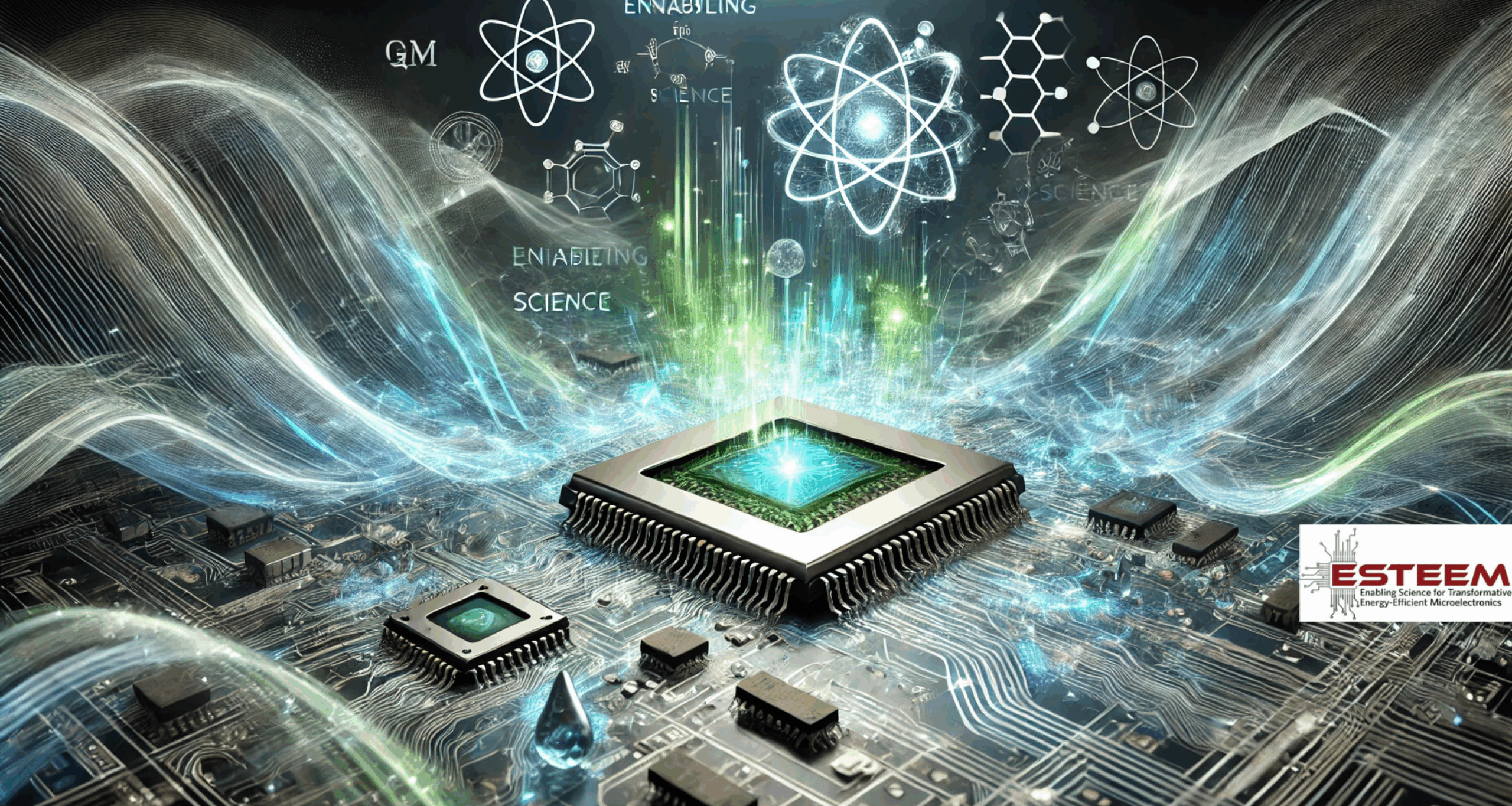
ESTEEM : Enabling Science for Transformative Energy-Efficient Microelectronics
ESTEEM is a multidisciplinary research initiative funded by the U.S. Department of Energy focused on reducing AI’s energy demands through innovations in microelectronics across the stack. MATRIX scientists specifically contribute to the energy-efficient AI through hardware–software co-design thrust, with emphasis on brain-inspired algorithms and neuromorphic systems that enable rapid adaptation and learning in uncertain environments. Housed at the SLAC National Accelerator Laboratory at Stanford University, the initiative fosters collaboration, workforce development, and student-driven innovation.
Learn more about ESTEEM
NSF EFRI BRAID : Efficient Learning of Spatiotemporal Regularities in Humans and Machines through Temporal Scaffolding
The EFRI topic Brain-Inspired Dynamics for Engineering Energy-Efficient Circuits and Artificial Intelligence (BRAID) supports interdisciplinary research to create a new engineering science of brain-inspired engineered learning systems. BRAID, supported and funded by the NSF, seeks to research neuromorphic systems inspired by the brain's flexibility, robustness, and energy efficiency to enable adaptable, generalizable, and energy-efficient AI.
Learn more about EFRI BRAID
CONCRETE : Center of Neuromorphic Computing under Extreme Environments
Funded by the Air Force Office of Scientific Research and the Air Force Research Laboratory's Center of Excellence, UTSA partners with USC, UCLA, Duke University, and RIT, to build neuromorphic computing devices and software that can be used in extreme application domains ranging from intense temperatures to dangerous conditions, such as radiation or highly corrosive elements.
Learn more about CONCRETE